Gastroscopy
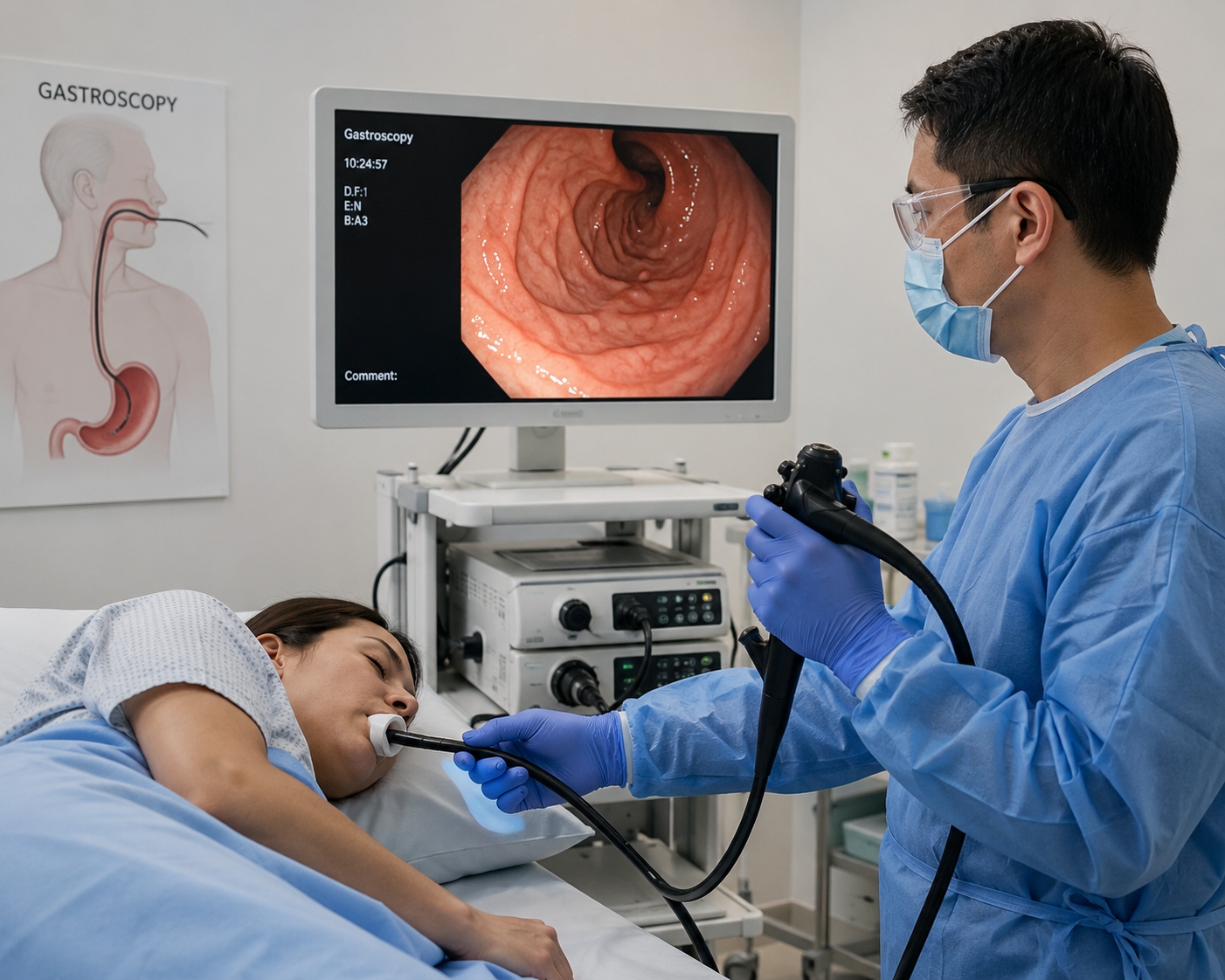
A gastroscopy (also known as an upper endoscopy) is a safe, routine day-stay procedure used to visually examine the lining of the esophagus, stomach, and duodenum (the first part of the small intestine).
Why is a Gastroscopy Recommended?
Our specialists utilize gastroscopy to investigate and accurately diagnose the root cause of persistent upper digestive symptoms, including:
- Chronic heartburn, acid reflux, or indigestion
- Difficulty or pain when swallowing
- Unexplained upper abdominal pain, nausea, or vomiting
- Investigating iron deficiency anemia or unexplained weight loss
- Screening for and monitoring coeliac disease, gastric ulcers, or Barrett’s esophagus
What to Expect During the Procedure
A gastroscopy is a highly efficient procedure, typically taking only 10 to 15 minutes.
- Comfort & Sedation: The procedure is performed under sedation administered by a specialist anesthetist. Patients remain asleep and completely comfortable throughout.
- The Examination: A thin, flexible tube equipped with a high-definition camera (an endoscope) is gently passed through the mouth. If clinically indicated, tiny tissue samples (biopsies) can be taken completely painlessly for pathology analysis.
- Recovery: You will rest in the recovery room shortly after the procedure. Because of the sedation, you will need a friend or family member to drive you home.
Preparation and Hospital Locations
To ensure optimal visibility of the stomach lining, patients are required to fast (no food or drink) for approximately six hours prior to the procedure. Our clinical team will provide you with precise, easy-to-follow fasting instructions.
Dr Rahme and Dr Sheiban perform routine gastroscopy procedures at The Sydney Private Hospital in Ashfield and Strathfield Private Hospital.

Gastroscopy Information